
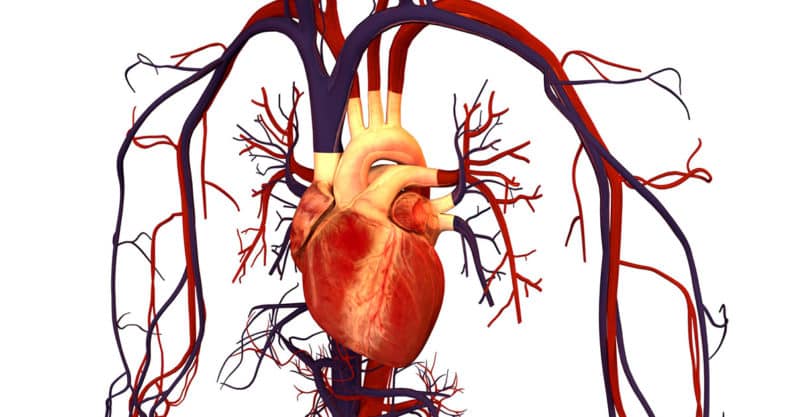
The class views the video “Hemo the Magnificent” before the teacher starts discussing the circulatory system. The discussion leads to identification and labeling of the parts of the circulatory system.
Title III Technology Literacy Challenge Grant
Learning Experience
| LE Title: Ya’ Gotta Have Heart | Authors: D. Scherzi K. Stewart |
| Grade Level: 4 | School: W. A. Wettel Elementary School |
| Topic/Subject Area: Science – HumanBody | School Address: PO Box 990 PeterboroRd. Vernon, NY 13476 |
| Email:[email protected]@vvs-wettel.moric.org | School Phone / Fax: 315 – 829 – 3615 |
Learning Context
Purpose or Focus of Experience
Students will understand the function of the different parts of the human circulatory system.
Connection to Standards
English Language Arts
Standard 1.2 – Language for Information and Understanding
Students will read, write, listen, and speak for information and understanding.
Math / Science / Technology
Standard 1 – Scientific Inquiry The central purpose of scientific inquiry is to develop explanations of natural phenomena in a continuing, creative process.
Standard 2 – Information Systems
Students will access, generate, process, and transfer information using appropriate technologies.
1. Information technology is used to retrieve, process, and communicate information and as a tool to enhance learning.
Students:
- use a variety of equipment and software packages to enter, process, display, and communicate information on different form, using text, tables, pictures, and sound
Standard 4 – Science
Students will understand and apply scientific concepts, principles, and theories pertaining to the physical setting and living environment and recognize the historical development of ideas in science.
The Living Environment
- Living things are both similar to and different from each other and nonliving things.
Students:
- explain the functioning of the major human organ systems and their interactions.
Essential Question
What is the function of the circulatory system in the human body?
Content Knowledge: Declarative, Procedural
Declarative:
- Understand the parts and their function within the circulatory system
- Describe the components of blood and their functions
- Identify and label the parts of the circulatory system
- Describe how the circulatory system functions as a transport system within the body
Procedural:
- Create a flow chart of the circulatory system
- Measuring / recording appropriate data
- Using the data to construct charts and graphs
Procedure
(Chronologically ordered description of all teacher & student activities and interactions.)
As the initiating activity, the class will view video “Hemo the Magnificent” and then teacher will initiate a discussion about the function of the circulatory system. The discussion will lead to identification and labeling of the parts of the circulatory system including:
- parts of the heart
- blood vessels
- parts of the blood
The discussion will also include the parts of a cell, including:
- cell membrane
- nucleus
- cytoplasm
- organelles
The media specialist will read Parts, by Tedd Arnold, during a library class. The media specialist will also offer instruction in use of book marked web sites.
The teacher will give each student a diagram of the human heart to label and color appropriately.
A Library class will be used to view the CD-Rom Human Body. Students will complete the activity sheets that follow along with the CD, Cells and Circulation 1 & 2. They will discuss their answers at the end of the class.
Other library classes and free time will be used for independent investigation of book marked web sites that discuss the circulatory system. Students will be responsible for logging on and working their way through all three web sites: How the Body Works; Science Fact File: Inside the Human Body; and A Look Inside the Human Body. Students will use activity chart to document their independent progress.
Students will take and record their own pulse rates, both at rest and after gym. (see activity page Pick Up the Beat)
As a culminating activity, each student will use the computer program Inspiration to create a flow chart of the circulatory system. Instruction in the use of this program will be given in the media center. Students will use class and library time to complete this activity, print their charts and discuss their projects with the class.
Instructional / Environmental Modifications
If students have fine motor or writing difficulty, enlarged or completed diagrams may be provided, or students may dictate to a scribe who will fill in the appropriate material for them. If Internet access is available in the classrooms, students may access the appropriate web sites there, as well as in the media center.
Time Required
The experience will require approximately 5 – 8 45 minute class periods.
Resources
NGS Picture Show: Human Body 2 CD-Rom National Geographic Society
Arnold, Tedd. Parts. New York: Dial Books. 1997.
A signed AUP (acceptable use policy) with permission to use the Internet
Internet access to use the following book marked web sites:
A Look Inside the Human Body
Science Fact File: Inside the Human Body
KidsHealth.Org for Kids: How the Body Works
computer program Inspiration
Assessment Plan
(Include samples of rubrics, checklists, etc.)
Students will produce an appropriately labeled diagram.
Students will use a prepared chart to record their heart rates at various times of the day.
Students will use teacher-generated check list to track their progress through independent Internet activities.
Students will produce a flow chart explaining this body system, using the computer program “Inspiration“.
Inspiration Rubric – Circulatory System
How clearly you organized and expressed the key points of the Circulatory System
| 4 Very clearly – you have included all the parts of the circulatory system | 3 Somewhat clearly – you have included most of the parts of the circulatory system | 2 I’m a little confused – some important parts of the circulatory system are missing | 1 Not yet – there are only a few parts of the circulatory system on your chart |
How well you explained each part of the circulatory system
| 4 Very well – you have a clear understanding of what each part does / included correct definitions for each part | 3 This is OK! You have included correct definitions for most parts of the circulatory system | 2 I only find a few definitions, or some of your definitions are incorrect | 1 Not yet – there are no definitions of the terms / the definitions are incorrect |
How effective is your Inspiration chart?
| 4 Great job! Your chart follows a correct pattern to illustrate the circulatory system. You have used graphics and color changes effectively, too! | 3 Some good parts. You might want to consider using a few more graphics and color changes to enhance your chart. | 2 Needs some zing! Few or no graphics. | 1 Not yet – No Inspiration chart printed out. |
How correctly you use grammar, spelling, and punctuation
| 4 Great! No errors! | 3 Good job! Only a few mistakes. | 2 Be sure to edit your work carefully! | 1 Not yet |
Pick up the Beat
NAME
Your pulse is caused by the stopping and starting of the blood as it rushes through your arteries. You can feel your pulse rate at any spot an artery is near the surface of the skin. These spots are called pulse points. One pulse point is located on the inside of your wrist.
Name some other pulse points.
Your pulse rate changes during different kinds of activities. Check your pulse rate after doing these activities.
| Activity | Pulse rate for15 seconds | Multiply by 4 | Pulse rate for1 minute |
| Sitting | |||
| Hopping 25 times | |||
| Hopping 100 times | |||
| Lying down |
How does your pulse rate change during exercise?
Why do you think your pulse rate changes during exercise?
FIND OUT…
How does body size affect pulse rate? Check the pulse rates for people of different sizes.
CELLS AND CIRCULATION
Assessment Sheet 1
_____________________________________________________
STUDENT NAME: _____________________
Directions: Use the following terms to fill in the blanks below:
- left ventricle
- right ventricle
- aorta
- left atrium
- right atrium
- capillaries
Blood flows throughout the human body in the following way:
From the lungs, fresh oxygen is transported to the heart, where the oxygen first enters the _________ . The blood then enters the _________ before it is pumped through the __________ to the _________ , where oxygen is exchanged for carbon dioxide in the cells of the body. After returning from the body, the blood then moves from the ________ to the ________ and finally back to the lungs, where carbon dioxide can be exhaled and fresh oxygen can be absorbed.
CELLS AND CIRCULATION
Assessment Sheet 2
_____________________________________________________
STUDENT NAME: ___________________________
Directions: Determine if the following statements are true or false:
1. ______ Red blood cells transport oxygen and carbon dioxide. They are found in the plasma of the blood.
2. ______ Cell membranes enclose the DNA of the cell.
3. ______ White blood cells are responsible for the clotting behavior of blood.
4. ______ Valves in the heart prevent blood from flowing in the wrong direction. The movement of blood through the valves also accounts for the sound of the heart beating.
5. ______ Kidneys act as filters that remove wastes from the blood.
6. ______ Plasma is the jellylike material found in every cell between the nucleus and the cell membrane.
7. ______ Metabolism describes the use of oxygen by the body to convert food into usable energy.
Further reading: How to Write a Lesson Plan: 7 Steps